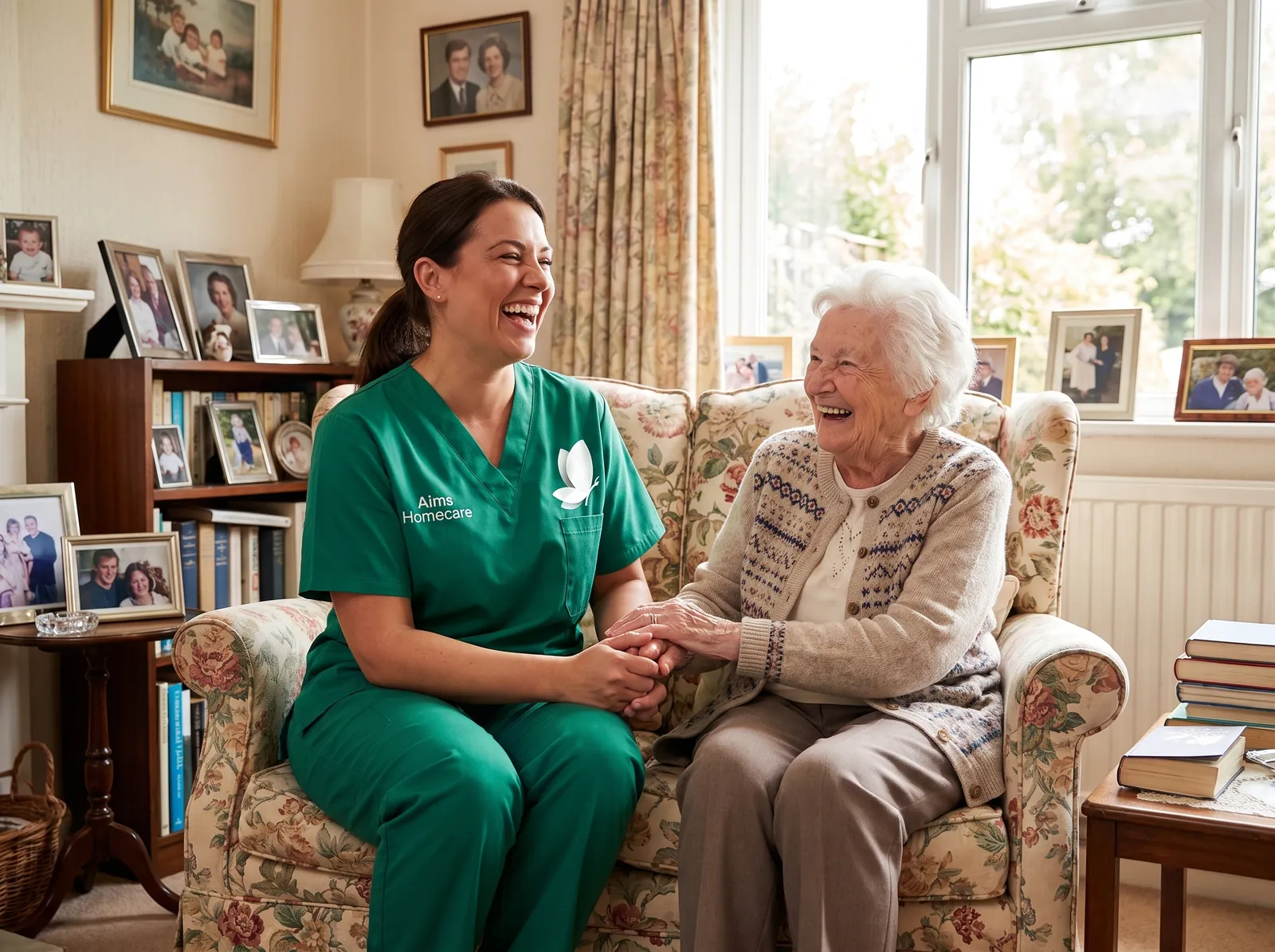
An Aims carer sharing a cup of tea and quiet companionship with an elderly lady at home
Energy-led routinesFlexed to treatment cycles
Home/Services/Cancer care

Cancer care

Cancer care at home,
through treatment and beyond.

Cancer care at home across Surrey, with practical, gentle support that flexes around treatment cycles and energy levels, for your loved one and for everyone who loves them.

CQC rated  Good 9.3/10 on  homecare.co.uk From  £28/hour Whole-family support ·  Support for everyone involved

“Excellent service. The carers we have are brilliant and so kind and caring.” — C W, verified review, homecare.co.uk

Understanding cancer care at home

Cancer care at home in Surrey.

A cancer diagnosis fills the calendar with appointments and the mind with worry, while everyday life still has to continue. Meals still need cooking, washing still needs doing, and on some days there is no energy left for either. Cancer care at home is the practical layer around medical treatment: trained carers assisting with daily living on the difficult days, stepping back on the easier ones, and giving the whole family room to breathe. Our carers support daily living across Surrey and the surrounding towns. They are carers, not nurses, and we coordinate with GPs, district nurses, oncology teams and Macmillan nurses so that everything joins up.

How our carers help

What our cancer care at home includes.

Every care plan is individual, though cancer care at home usually covers the support below. Every Aims carer wears our green uniform, so you always know who is at the door.

Energy-led routines

Visits planned around chemo cycles, with more support in the tired days after treatment and a lighter touch in the good weeks.

Appointment transport & accompaniment

A lift to oncology, a familiar face in the waiting room, and notes taken so nothing important is forgotten.

Nutrition when appetite is poor

Small, appealing meals little and often, favourite foods on hand, and weight changes flagged to the care team.

Infection-aware hygiene

Treatment can lower immunity. Our carers are meticulous about hygiene, from hands to kitchen to laundry, and stay away if they are unwell.

Medication prompts & symptom noting

Medication prompted and recorded on time, side effects noted and shared with the medical team promptly.

Personal care with dignity

Carers assist gently with washing, dressing and freshening up, especially on the days when everything aches.

The house kept running

Laundry, shopping, fresh sheets and a tidy kitchen, all of which feel considerable during treatment.

Emotional support for everyone

Someone to talk to, or to sit quietly with, and a listening ear for the family carrying the worry.

Coordination with oncology & Macmillan

We work alongside the GP, oncology team, district nurses and Macmillan nurses, in one joined-up circle of care.

Why this support matters

More people are living with cancer.

Cancer is increasingly a condition people live with, often for years, and most of that living happens at home, between hospital appointments.

Almost 3.5 million people affected.

The number of people living with cancer in the UK has risen to almost 3.5 million, which is nearly half a million more than just five years ago (Macmillan Cancer Support, 2025). Behind that figure are millions of ordinary days that still need to be lived well.

Most diagnoses come later in life.

Most cancer cases are in people aged 50 and over, and almost two-fifths (37%) of new cancer cases in the UK each year are diagnosed in people aged 75 and over (Cancer Research UK). Treatment often arrives on top of the everyday challenges of later life, which is where cancer care at home helps most.

Why support at home matters.

Longer lives with cancer mean more treatment cycles, more recovery weeks and more pressure on families in between. Practical help at home, with meals, washing, lifts and rest for family carers, is what makes the medical side sustainable.

The day-to-day challenges

The challenges we plan around.

Cancer and its treatment follow patterns that families come to recognise quickly. Our carers understand those patterns and plan for them.

Treatment fatigue and chemotherapy cycles.

Chemotherapy runs in cycles, and so does energy, which is often lowest in the days after each session and slowly rebuilds before the next. We schedule care to match: extra visits and more hands-on help in the low days, then stepping back as strength returns, so independence is never withdrawn a day earlier than necessary. If a day changes unexpectedly, the plan changes with it.

Changes in appetite, taste and weight.

Treatment can steal appetite, change how food tastes and make once-loved meals unappealing. Our carers encourage rather than press: small portions offered often, cold options when hot smells are off-putting, plenty of fluids, and favourite foods kept in the cupboard for the moments when appetite returns. Weight and eating changes are recorded and shared with the oncology team and GP, so problems are caught early.

The emotional load on the household.

Cancer affects the whole household: fear, nerves on hospital days, broken sleep and exhausted family carers. Our carers bring calm, practical normality, and our respite care gives exhausted family carers real time off. Should the focus of care ever shift from treatment to comfort, our palliative care team continues the same gentle support, with the same familiar faces.

Visiting cancer care

from £28/hour

30-minute visits from £22, 45 minutes from £25 · live-in cancer care from £225 per 24 hours (around £1,575/week). Every price is a "from" rate. Your exact quote is confirmed after a free, no-obligation physical assessment at your loved one's home. Same rates 7 days a week, with no weekend or bank-holiday premiums, no call-out fees and no hidden charges.

The evidence

Cancer and older age in Britain.

Almost 3.5 million people are living with cancer in the UK (Macmillan Cancer Support, 2025). Most new diagnoses come later in life, and far more people now live for years afterwards, which is exactly why support at home, between hospital appointments, matters so much.

Who is diagnosed and who survives.

UK figures: age at diagnosis, and long-term survival then and now

New cases diagnosed at 75 or over37%
Surviving 10+ years, in the 1970s23.7%
Surviving 10+ years, by 201849.8%
Living with long-term effects of cancer or its treatment1 in 4

Sources: of more than 403,000 new cancer cases in the UK each year, almost two-fifths (37%) are diagnosed in people aged 75 and over, and ten-year survival for all cancers combined rose from 23.7% in the early 1970s to 49.8% by 2018 (Cancer Research UK, based on 2019 and 2021 to 2022 data). Around one in four people with cancer live with the long-term consequences of the disease or its treatment (Macmillan Cancer Support, 2025). An honest caveat: these are all-cancers averages. Survival differs enormously between cancer types, and nothing here predicts what will happen to one particular person.

What these figures mean for families.

Two things are true at once. Cancer arrives most often in later life, usually alongside arthritis, heart conditions, frailty or memory problems that were already present, and people now live far longer with it than they once did. The practical picture for most families is therefore not a short crisis but months or years of treatment cycles, side effects, hospital trips and tired days, layered on top of everything else. That is a great deal to carry on goodwill and annual leave alone.

How our carers help at home.

We work around the treatment, not against it. Care is scheduled to match chemotherapy cycles, with more support in the flat days after a session and a step back as strength returns. Carers help with washing and dressing when fatigue makes it hard, prompt medication on time, tempt appetite with small meals, and keep the house calm and normal. Changes in weight, appetite, pain or mood are recorded and passed to the oncology team and GP, so that nothing is missed between appointments. Because the same carers return, your relative is not explaining themselves to a stranger on the day they feel worst.

How it works

From first call to first visit.

1

A free assessment at home.

We visit at home or in hospital, discuss the treatment plan and how the days actually feel, and listen to what would help most.

2

A written, personalised care plan.

A written plan built around treatment cycles, appointments and energy levels, with a clear written quote.

3

Matching you with a carer.

DBS-checked, trained carers are matched for warmth as much as skill, with introductions before care begins.

4

Ongoing reviews as treatment progresses.

Care that steps up, down or pauses as treatment progresses, with regular reviews and one local Surrey team to call.

Care can begin within 24 to 48 hours of your free assessment.

"Excellent service. The carers we have are brilliant and so kind and caring."
C WPartner of client, verified review, homecare.co.uk, April 2025

Rated 9.3/10 from 50 reviews on homecare.co.uk · Top 20 Home Care Provider, South East England

Cancer care questions

Common questions about cancer care.

Home care. Our carers support daily living: meals, personal care, medication prompts, housekeeping, companionship and lifts to appointments. Clinical treatment stays with the professionals: the oncology team, GP, district nurses and Macmillan nurses. The two work best together, and we coordinate closely with the medical team so nothing falls between the gaps.

Yes. That flexibility is central to good cancer care at home. We can add extra visits in the difficult days after each treatment, reduce them in the better weeks, and adjust quickly when a day does not go to plan. There are no rigid contracts requiring visits that are not needed; the plan follows energy levels rather than the reverse.

Yes. Carers can provide transport, wait during treatment and sit in on consultations if that is wanted, which gives a second pair of ears when information is coming quickly. For family who cannot always be there, it means no one faces an oncology waiting room alone, and that someone will remember what was said.

Gently and without pressure. Small portions are offered often, favourite foods kept to hand, cold or plain options provided when treatment changes taste and smell, and fluids encouraged through the day. We follow any guidance from dieticians, record what is being eaten, and report weight loss or swallowing changes to the medical team early.

Care changes with you. Many people need less support as recovery builds, and we step back readily. If the focus ever shifts from treatment to comfort, our palliative care and end of life care continue seamlessly with the same familiar carers, working alongside the hospice and community teams. Whatever the course of the illness, you will not have to change providers partway through it.

Visiting care starts from £28 an hour, with 30-minute visits from £22 and 45-minute visits from £25; live-in care starts from £225 per full 24 hours, which is around £1,575 a week. Every price is a starting-from rate: your exact quote is confirmed after a free physical assessment at your loved one's home, and the same rates apply 7 days a week, with no weekend or bank-holiday premiums. Funding can help significantly: NHS Continuing Healthcare may fully fund care where needs are primarily health-related, and Attendance Allowance and local authority support may also apply. Macmillan also offer grants and benefits advice. See our pricing page and funding guide.

Across Surrey

Cancer care at home across Surrey.

Aims Homecare provides cancer care at home throughout Surrey. From our office in Leatherhead, our trained carers support people through chemotherapy, radiotherapy, surgery recovery and life after treatment, from 30-minute visits to full live-in care.

We work alongside oncology teams at Surrey's hospitals, GPs, district nurses and Macmillan nurses, timing care around treatment cycles and hospital days. Family carers matter too: our respite care provides genuine breaks, and night care covers the long hours when sleep is broken. And if the goal of care ever changes, our palliative care continues the same support, focused on comfort.

If you are arranging cancer care at home during treatment, compare costs on our pricing page, or call our team in Surrey for a calm, honest conversation about what would help.

Related services

Other home care services we provide.

Arrange a free cancer care assessment.

Tell us what treatment involves and what the difficult days are like, and we will build cancer care at home around both. Care can begin within 24 to 48 hours.

You can also speak to our Surrey care team on 01372 386222

01372 386222