Living alone, and feeling lonely.
Older people living alone (England and Wales, Census 2021) and chronic loneliness (England, 2024/25)
Women aged 65+ living alone36.3%
All people aged 65+ living alone30.1%
Men aged 65+ living alone22.7%
Aged 75+ who feel lonely often or always5%
Sources: 3.3 million people aged 65 and over lived alone in England and Wales, which is 30.1% of that age group, rising to 36.3% of older women and falling to 22.7% of older men (ONS, Census 2021). 5% of adults aged 75 and over in England said they feel lonely often or always, and 4% of those aged 65 to 74 (Community Life Survey 2024/25). Around half of everyone living alone in the UK is now aged 65 or over (ONS, Families and households, 2025). An honest caveat: the last row is a different measure from the first three, and living alone is not the same as being lonely. Plenty of people live alone and are content. Age UK estimates that nearly a million older people in the UK are often lonely.
What these figures mean for families.
Two separate points sit behind the chart. Only a small minority of older people will tell a survey that they are lonely; that generation was not raised to say so, and many are genuinely content. Nearly a third, however, live on their own, and among older women the figure is higher still. The risk is not unhappiness so much as an absence of observation: nobody notices that the fridge is emptier this week, that the post has accumulated, or that the walk to the shop stopped in March. Company and safety are closely connected.
How companionship care addresses this.
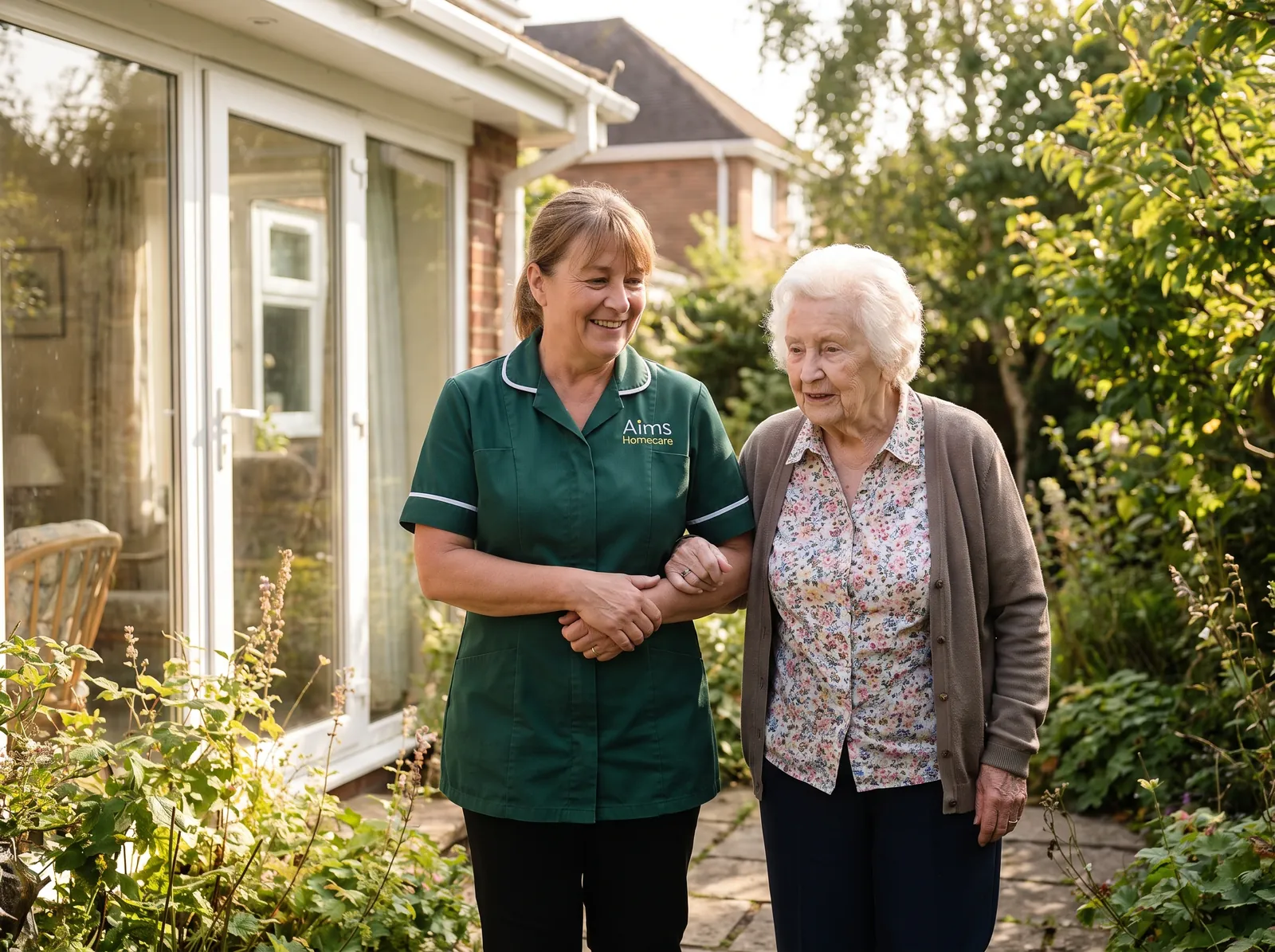
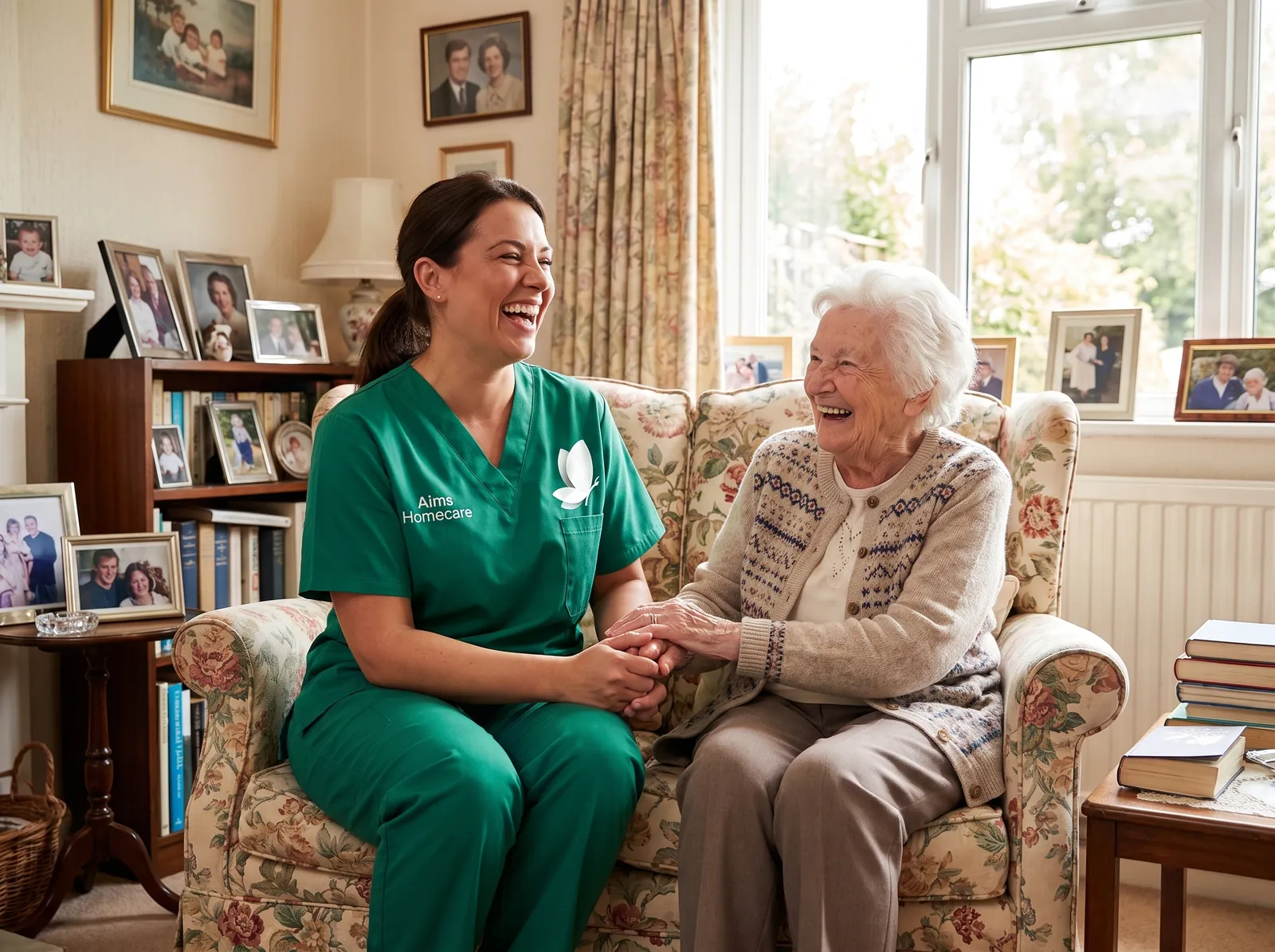
Companionship care places a familiar carer in the diary at the same time each week, so there is both something to anticipate and someone who will notice if circumstances change. A visit might be tea and the crossword, a lift to the garden centre, help writing birthday cards, or a walk that would feel daunting alone. Because the carer knows your relative, small changes are identified early: reduced appetite, disturbed sleep, new unsteadiness on the stairs. Families are told promptly. An hour a week is a reasonable starting point, and it is far easier to extend a visit somebody enjoys than to introduce care during a crisis.