
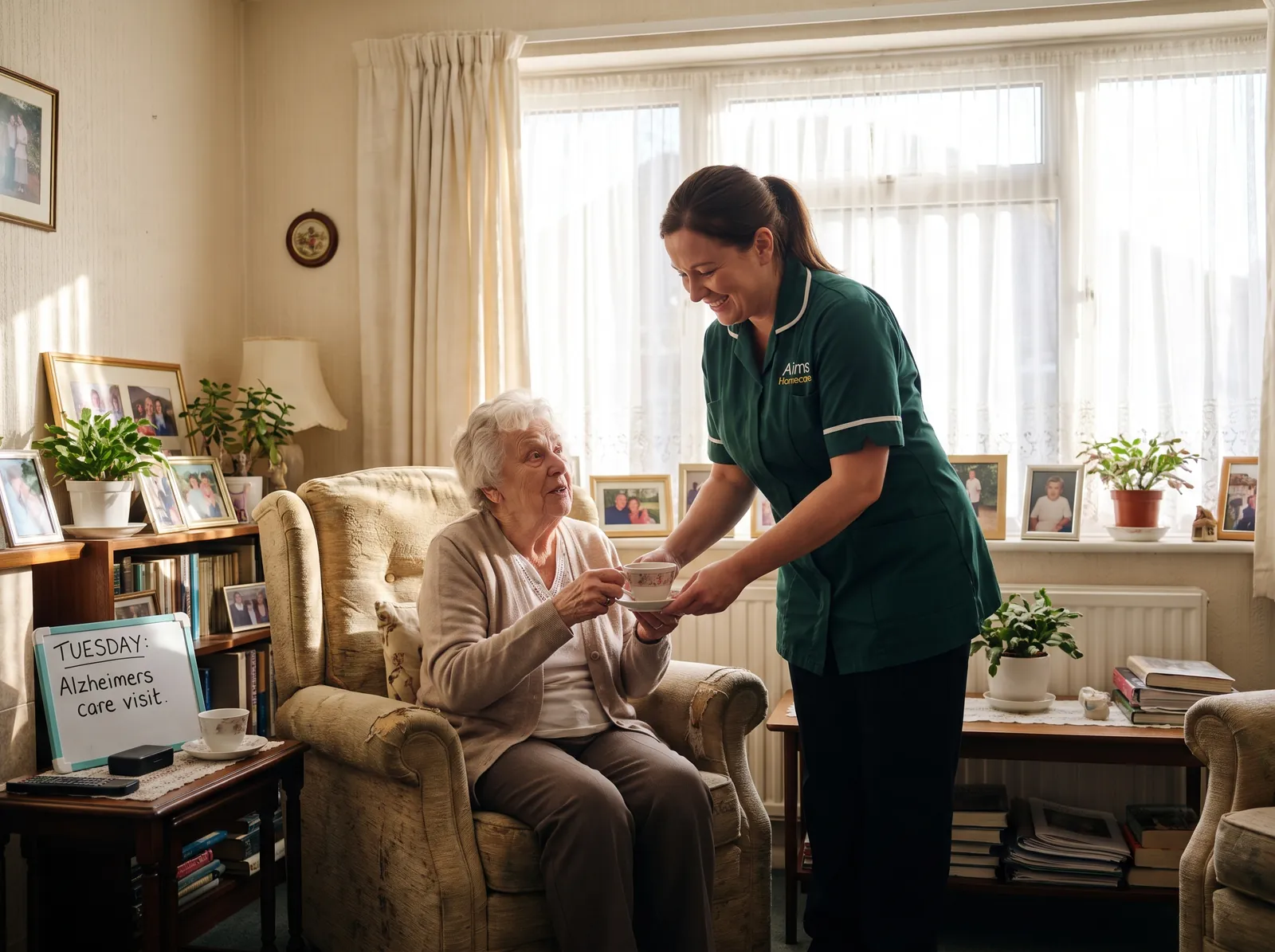
An Aims carer helping an elderly lady with her medication routine in her kitchen at home
Hypo-aware carersTrained to spot the signs
Home/Services/Diabetes care

Diabetes care

Diabetes care at home,
keeping the daily routine steady.

Diabetes care at home across Surrey, with carers who keep meals balanced, medication prompted on time, routines steady and a watchful eye for the signs that something is wrong.

CQC rated  Good 9.3/10 on  homecare.co.uk From  £28/hour Balanced meals ·  Cooked fresh at home

“The team that cares for me are timely, caring, and supportive.” — S M, verified review, homecare.co.uk

Understanding diabetes at home

Why routine matters so much in diabetes.

Diabetes is one of the most manageable long-term conditions, provided the daily routine holds. It is also one of the most common: almost 6 million people in the UK are living with diabetes, an all-time high (Diabetes UK, 2024/25), and around 1.3 million more are living with type 2 diabetes that hasn't yet been diagnosed (Diabetes UK). Regular balanced meals, medication and insulin on schedule, adequate fluids, glucose checks done and recorded: none of it is complicated, but all of it has to happen every day. When memory falters, mobility declines or living alone allows routines to slip, blood sugars begin to swing. Diabetes care at home restores a reliable rhythm to the day. Our carers support daily living across Surrey and the surrounding towns: they prompt, prepare, observe and record, while clinical decisions remain with your GP, practice and district nurses and diabetes specialist team, with whom we coordinate closely.

The types of diabetes

The two main types of diabetes.

Type 1 and type 2 diabetes are different conditions with different daily demands. Knowing which your relative lives with shapes how we plan meals, prompts and checks.

Type 1 diabetes and daily insulin.

Around 8% of people diagnosed with diabetes in the UK have type 1 (Diabetes UK), an autoimmune condition where the body stops making insulin, so insulin must be taken every day for life. Daily life runs on precise timing: doses, carbohydrates and glucose checks all matter. How our care adapts: reliable prompts for insulin and glucose checks, meals timed and balanced to the regime, and hypo awareness on every visit. Injections themselves stay with the district nurses or a trained family member. Carers prompt, support and record.

Type 2 diabetes and daily routine.

Around 90% of people diagnosed with diabetes in the UK have type 2 (Diabetes UK), which means the body does not make enough insulin, or that the insulin it makes does not work properly. It is usually managed with diet, tablets and sometimes insulin, and routine is central. How our care adapts: regular balanced meals cooked fresh, medication prompted and recorded on time, hydration through the day, and the shopping that keeps cupboards diabetes-friendly.

Why type 2 is common in later life.

The risk of type 2 diabetes increases with age. Diabetes UK notes that risk is higher for white people over 40, and over 25 for people who are African-Caribbean, Black African, Chinese or South Asian. Type 2 is therefore by far the most common type among the older people we support, and it often arrives alongside other conditions, medications and memory changes. How our care adapts: diabetes support woven into wider elderly care, with one carer and one visit covering meals, medication, mobility and a proper look at feet and skin.

Diagnosed diabetes in the UK by type.

Approximate share of people diagnosed with diabetes

Type 2 diabetes~90%
Type 1 diabetes~8%
Rarer types of diabetes~2%

Source: Diabetes UK, 2024/25. Of people diagnosed with diabetes in the UK, around 90% have type 2, around 8% have type 1 and around 2% have rarer types. Almost 6 million people in the UK are living with diabetes, with around 1.3 million more estimated to have undiagnosed type 2.

How our carers help

What our diabetes care at home includes.

Every care plan is individual, though diabetes care at home usually covers the following.

Medication & insulin prompts

Tablets and insulin prompted on time and every dose recorded. Clinical tasks such as administering injections stay with the nurses.

Balanced meal preparation

Regular, diabetes-friendly meals cooked fresh, with steady carbohydrates, proper portions and never a skipped mealtime.

Hypo & hyper awareness

Carers are trained to recognise the signs, including shakiness, confusion, drowsiness and thirst, and to act quickly, following the care plan and calling for medical help when needed.

Glucose-check reminders

Blood glucose checks are prompted at the right times and results recorded, so that you and the GP can see the pattern clearly.

Foot-care vigilance

Carers observe feet and skin daily, because in diabetes a small blister matters. Anything unusual is reported promptly to the GP, district nurse or podiatrist.

Hydration & steady routine

Drinks offered through the day and meals, checks and rest kept to a dependable rhythm, which is the quiet foundation of stable sugars.

The right shopping

Cupboards stocked with diabetes-friendly choices, and hypo treatments always where they should be.

Appointment support

Lifts and company for diabetic reviews, eye screening and podiatry: the appointments that quietly protect long-term health.

Working with the diabetes team

We coordinate with the GP, district nurses and diabetes specialist nurses, and update the family after every visit.

The day-to-day challenges

The challenges we plan around.

Diabetes in later life carries risks that reward vigilance. Our carers know what to watch for and what to do about it.

Low and high blood sugar episodes.

Low blood sugar can arrive quickly, bringing trembling, sweating and confusion that can look like dementia, while high sugars build more slowly with thirst, tiredness and frequent trips to the bathroom. Our carers are trained to recognise both, act fast on a suspected hypo with the treatment set out in the care plan, and call for medical help when the situation needs it. Every episode is recorded and reported, so the GP can adjust treatment before the next one.

Feet, skin and slow healing.

Diabetes can dull sensation in the feet and slow healing, which is how a small cut becomes a serious problem unnoticed. Our carers build gentle checks into everyday care: clean, dry, moisturised feet, well-fitting footwear, and a proper look at any redness, blister or break in the skin. Carers do not dress or treat wounds; anything of concern goes promptly to the district nurse, podiatrist or GP. Caught early, most problems are readily treated.

When memory problems disrupt the routine.

Diabetes management breaks down quietly when memory slips: doses doubled or forgotten, meals missed, sweet foods eaten unawares. Where diabetes and memory problems overlap, our carers become the routine, arriving at the times that matter, prompting and recording medication, sitting down to meals together, and keeping honest notes families can trust. If dementia is part of the picture, our dementia care experience works hand in hand with diabetes support.

Visiting diabetes care

from £28/hour

30-minute visits from £22, 45 minutes from £25, and live-in diabetes care from £225 per full 24 hours (around £1,575/week). Every price is a "from" rate. Your exact quote is confirmed after a free, no-obligation physical assessment at home. Same rates 7 days a week, including weekends and bank holidays.

How it works

From first call to first visit.

1

A free assessment at home.

We visit at home or in hospital, review the diabetes regime, including medication, meals and checks, and establish what has been slipping.

2

A written, personalised care plan.

A written plan built around dose times, mealtimes and glucose checks, agreed with you, with a clear written quote.

3

Matching you with a carer.

DBS-checked, trained carers are matched to your relative, with introductions before care begins. Every Aims carer arrives in our green uniform, so you always know who is at the door.

4

Ongoing reviews as needs change.

Regular reviews, records shared with you and the GP, and one local Surrey team to call when anything changes.

Care can begin within 24 to 48 hours of your free assessment.

"The team that cares for me are timely, caring, and supportive."
S MClient, verified review, homecare.co.uk, August 2024

Rated 9.3/10 from 50 reviews on homecare.co.uk · Top 20 Home Care Provider, South East England

Diabetes care questions

Common questions about diabetes care.

No. Our carers prompt insulin at the right times, support someone who self-administers and record that a dose has been taken, but the injection itself is a clinical task for district nurses or a trained family member. We coordinate closely with the nursing team so that prompts, visits and records align and nothing is missed between us.

They act immediately. Carers are trained to recognise the signs, such as shakiness, sweating, sudden confusion or drowsiness, and to follow the agreed steps in the care plan, which typically means fast-acting glucose, staying with the person, re-checking, and calling 999 if there is any doubt or no improvement. Every episode is recorded and reported to the family and the GP, because a pattern of hypos indicates that treatment needs reviewing.

Carers prompt checks at the times the care plan sets, support your relative to carry out their own test or read their sensor, and record every result so that patterns are visible to you and the GP. Alongside this, our health & wellbeing checks can monitor blood pressure, pulse and general wellbeing on the same visit.

Because diabetes can reduce sensation in the feet and slow healing, small injuries can go unnoticed and become serious. Foot problems are one of the most common causes of hospital admission in older people with diabetes. Daily observation during personal care identifies problems early, and anything a carer is unsure about goes straight to the podiatrist, district nurse or GP. Carers observe and report; they do not treat.

Yes. Regular, balanced meals are a large part of diabetes management. Carers shop for and cook fresh meals that follow any guidance from the GP, dietician or diabetes nurse: sensible portions, steady carbohydrates, and meals at consistent times rather than long gaps. They also make mealtimes something to look forward to, since food eaten in company is far more likely to be eaten at all.

Visits start from £22 for 30 minutes, often enough for a mealtime, medication prompt and glucose-check reminder, with 45 minutes from £25 and an hour from £28. Waking nights are from £29/hour, sleeping nights from £150/night, and live-in care from £225 per full 24 hours (around £1,575/week). Every price is a "from" rate. Your exact quote is confirmed after a free physical assessment at your loved one's home, and the same rates apply 7 days a week, with no weekend or bank-holiday premiums. Funding such as Attendance Allowance and local authority support may help. See our pricing page and funding guide for the full picture.

Across Surrey

Diabetes care at home across Surrey.

Aims Homecare provides diabetes care at home throughout Surrey. From our office in Leatherhead, our trained carers keep daily diabetes routines steady, from 30-minute mealtime and medication visits to full live-in care for those who need someone there around the clock.

We work alongside GP practices, district nurses and diabetes specialist teams across Surrey, prompting and recording so the clinical picture stays clear between appointments. Many families combine diabetes support with hourly care, health & wellbeing checks or night care when overnight hypos are the worry.

If you are concerned that a parent's diabetes routine is slipping, compare costs on our pricing page, or call our team in Surrey for straightforward advice.

Related services

Other home care services we provide.

Arrange a free diabetes care assessment.

Tell us about your relative's diabetes routine, what is working and what is slipping, and we will build a care plan that keeps each day steady. Care can begin within 24 to 48 hours.

You can also speak to our Surrey care team on 01372 386222

01372 386222