Living with a long-term condition.
With high blood pressure, heart conditions, diabetes or COPD, the trend matters more than any single reading. Regular wellbeing checks build a week-by-week record that a single GP appointment cannot provide.


Health & wellbeing checks
Wellbeing checks record blood pressure, pulse, temperature and oxygen levels at home in Surrey, scored using an early-warning system recognised throughout the NHS.
“Aims Homecare are absolutely fantastic, we do not know what we would do without them.” — Mr F. Eerin, verified review, homecare.co.uk
Understanding wellbeing checks
A health and wellbeing check is a short, structured visit during which a trained carer records your relative's vital signs, the same observations a nurse would take, and scores them using a nationally recognised early-warning system used across the NHS. That scoring converts routine readings into a number, so that a change in condition is identified from the trend rather than from a single reading. Small changes are picked up before they become significant problems, and the results are shared with the family. For relatives living at a distance from Surrey, it provides a documented account rather than an impression.
What's included
Every check follows the same structured routine using our wellbeing kit, so that results remain comparable from week to week.
The essentials of heart health, recorded every time.
An early clue to infection, often before other symptoms.
A simple observation that says a lot about overall health.
Measured painlessly with a fingertip pulse oximeter.
Identifying confusion or drowsiness that is out of character.
Gentle questions about eating and drinking well.
How your relative is feeling, since mood is clinically relevant.
A quick eye over trip hazards, heating and food in the fridge.
Written records after every visit, sent to the family.
How the scoring works
Three stages turn routine observations into a reliable early warning of deterioration.
Your carer records blood pressure, pulse, temperature, breathing rate and oxygen levels using our wellbeing kit, the same observations taken on a hospital ward.
Readings are scored using the nationally recognised early-warning system used across the NHS, which identifies subtle changes well before they become obvious.
Where anything gives cause for concern, we escalate promptly to the GP or the appropriate healthcare professional, and inform the family the same day.
When a check raises a flag
Small changes identified early are what prevent hospital admissions. The following process applies whenever a check gives cause for concern.
The early-warning score flags a change, frequently before your relative feels unwell at all.
The family is told the same day, in plain English: what was found, what it means and what happens next.
The GP, NHS 111, or 999 in an emergency, is involved at the level of urgency the score indicates.
Additional checks are added over the following days and monitoring continues until readings return to normal.
Most concerns prove to be nothing serious, and establishing that with certainty is the purpose of the check.
Who benefits
With high blood pressure, heart conditions, diabetes or COPD, the trend matters more than any single reading. Regular wellbeing checks build a week-by-week record that a single GP appointment cannot provide.
The first days at home carry the highest risk of readmission. Regular observations identify deterioration early, while it can still be treated at home.
Trained observation of your relative, with written notes after every visit, so that distance does not mean an absence of information.
Many older people will tolerate a symptom rather than seek help. Regular checks mean the problem is raised at the right point, by the carer rather than by the person themselves.
Health & wellbeing checks
Available as an addition to any visit, or as a standalone weekly check. 30-minute visits at £29.95. No call-out fees, no hidden charges. Every price is a starting "from" rate, and your exact quote is confirmed after a free physical assessment at your home. Same rates 7 days a week, with no weekend premium; Bank Holidays are charged at double the standard rate.
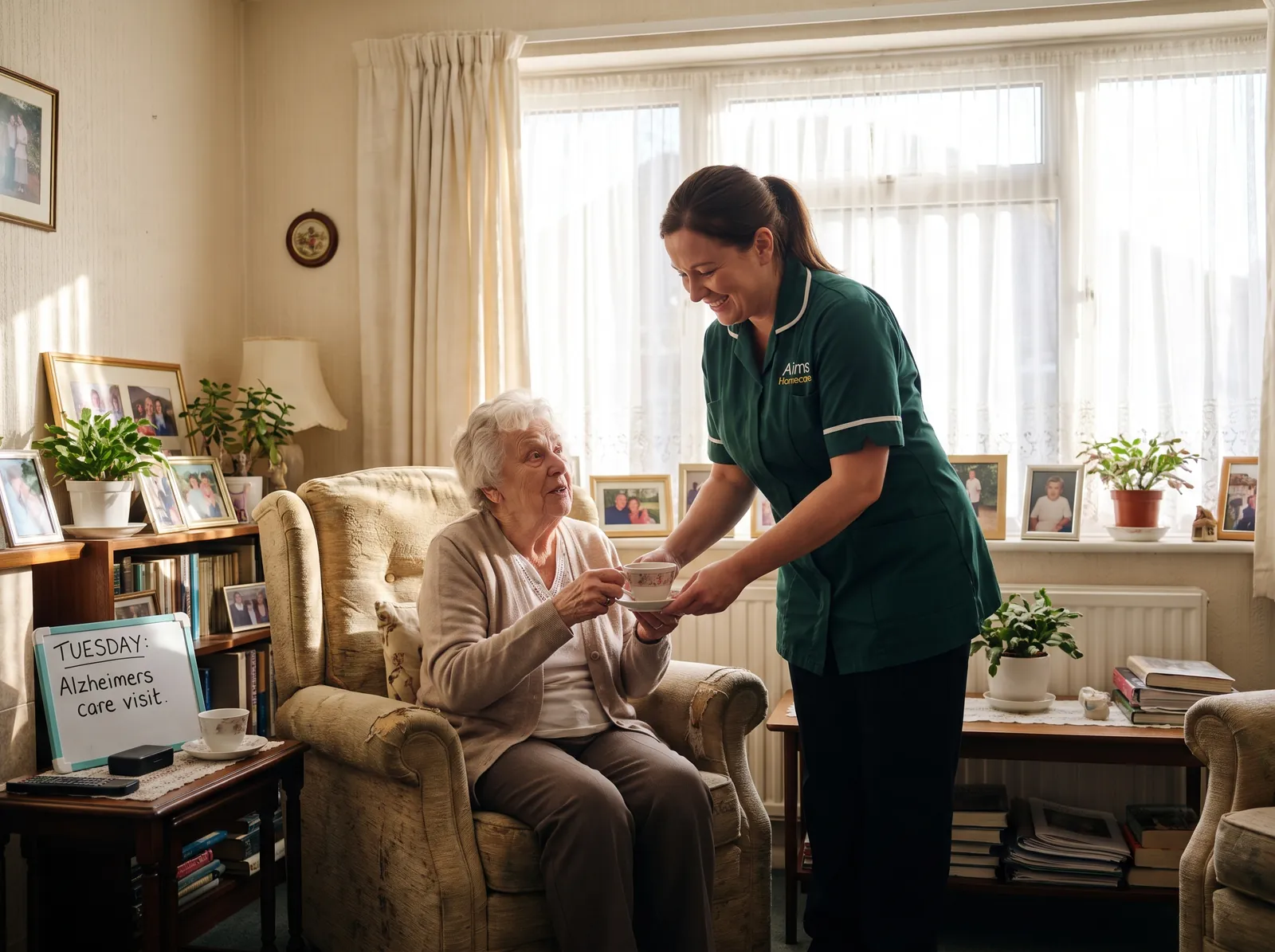
Peace of mind, from anywhere
When relatives live several hours from a parent, an unanswered telephone call becomes a source of real anxiety. Regular wellbeing checks provide trained observation and written notes after every visit.
Who it's for
Heart conditions, diabetes, COPD and similar diagnoses benefit from consistent readings taken the same way each time, producing a record the GP can work from.
The weeks following discharge carry the greatest risk of setback. Regular checks identify complications early and help prevent a readmission.
Where relatives cannot attend in person, a scheduled check with notes after every visit establishes how a parent is rather than leaving the family to assume.
Infections, dehydration and changes in blood pressure rarely present obvious symptoms at first. Structured scoring detects the early warning signs before they become emergencies.
"Aims Homecare are absolutely fantastic, we do not know what we would do without them."
Wellbeing check questions
No. Our carers are not nurses, and wellbeing checks do not replace medical care. They are trained carers using a nationally recognised early-warning scoring system, as used across the NHS, to take and record observations reliably. Where a reading gives cause for concern, we escalate promptly to the GP or the appropriate healthcare professional, which is the purpose of the service.
It depends on the circumstances. A weekly check suits most families seeking general reassurance. After a hospital stay, or where there is a long-term condition, more frequent checks may be appropriate for a period. We will recommend a schedule at your free assessment, and it can be adjusted at any point.
The scoring system indicates how urgent the concern is. Depending on the score, your carer contacts the GP, arranges further medical attention, or calls 999 in an emergency, and the family is informed immediately. Nothing is held over until the following visit.
Yes. With your relative's consent, notes from every check are shared with the family, so that readings and trends can be followed over time from anywhere in the country.
£36.95 per hour, with 30-minute visits at £29.95, and a check can be added to any existing care visit. You will receive an exact written quote after your free assessment. Our pricing page sets out full details and funding options.
Your carer brings a professional wellbeing kit to every check: a blood pressure monitor, a thermometer, and a fingertip pulse oximeter for oxygen levels. Using the same equipment in the same way each time is what makes readings comparable from week to week.
Yes. A wellbeing check takes only a few minutes, so it can be added to any existing visit, whether hourly care, companionship care or another service. Most families add the additional minutes rather than book a separate visit.
With your relative's consent, yes. Readings and any concerns are shared with the GP surgery, so that the practice has a continuous record to work from rather than a single snapshot. Results are shared with the family after every visit.
Related services
Local to you
Aims Homecare provides wellbeing checks in Surrey from our office at 59 Kingston Road, Leatherhead, with the same local team, no call centres and no scripts. Families book us for welfare visits in Surrey, health monitoring at home and elderly welfare checks, as well as regular wellbeing visits. Wherever you are in Surrey, the service is the same: a trained, DBS-checked carer, a professional wellbeing kit and an NHS-recognised early-warning score, with plain-English notes shared after every visit.
Wellbeing checks combine readily with our other services. Add a few minutes of health monitoring to an hourly care or companionship visit, pair them with night care after a hospital stay, or build them into a full live-in care plan. Checks start at £36.95/hour, with 30-minute visits at £29.95. See our pricing page for the full picture, or book a free assessment and checks can begin within 24 to 48 hours.