Falls frequently occur at night.
Night-time trips to the bathroom are among the highest-risk moments of the day: a dark landing, a hurried walk, and nobody present to steady an arm. A night carer in the home makes that walk a supported one.


Night care
Night care places a trained carer in your relative's home overnight, across Surrey and the wider Surrey area, so that nights are safe and the family is able to sleep.
“Aims Homecare are absolutely fantastic, we do not know what we would do without them.” — Mr F. Eerin, verified review, homecare.co.uk
Understanding night care
Night care means a trained carer remains in your relative's home overnight, typically for a shift of 8 hours or longer, ready to assist with whatever the night requires. For most families the hours between bedtime and breakfast are the most difficult: the risk of a fall on the way to the bathroom, confusion in the small hours, or a family carer who is no longer sleeping. Night care removes that risk without anybody having to leave home.
Why night care matters
Most families manage the daytime well. The hours of darkness, when nobody is observing and nobody is nearby, carry the greater clinical risk and the greater anxiety.
Night-time trips to the bathroom are among the highest-risk moments of the day: a dark landing, a hurried walk, and nobody present to steady an arm. A night carer in the home makes that walk a supported one.
For people living with dementia, evenings and nights often bring sundowning: restlessness, anxiety and confusion that can lead to wandering. A calm, familiar presence keeps nights settled. Learn more about our dementia care at home.
Interrupted sleep depletes family carers faster than any other factor. Rising two or three times a night over a sustained period is not viable, and standards of care fall when the person providing it is exhausted.
The evidence
The evidence below sets out what is known about falls in later life, nights with dementia, and the difference a carer in the home makes to overnight risk.
Proportion of older people who fall at least once a year, by age
Around a third of people aged 65 and over, and around half of people aged 80 and over, fall at least once a year (Office for Health Improvement & Disparities, "Falls: applying All Our Health"). In one year there were around 220,000 emergency hospital admissions related to falls among over-65s in England, around two-thirds of them people aged 80 and over (Office for Health Improvement & Disparities).
Many people living with dementia become more restless, anxious or confused as evening falls and into the night, a pattern usually described as sundowning. Reliable prevalence figures do not exist, because studies measure it in materially different ways, so none is offered here. What families report, and what the Alzheimer's Society describes, is that it is common, distressing and hardest to manage alone in the small hours. A calm, familiar night carer who reassures rather than corrects keeps those nights settled.
Overnight support addresses the risk itself rather than only the response: a steadying arm for every bathroom trip, lighting arranged before it is needed, trip hazards cleared, medication given on time, and someone present within seconds rather than whenever an alarm is answered. Lying on the floor for an hour or more after a fall, known as a "long lie", is linked to serious harm even in the absence of injury (Wild et al., British Medical Journal, 1981). The most reliable way to prevent one is for help to be in the house already.
Two ways to do nights
Both arrangements place a carer in the home all night. The difference lies in how much hands-on support your relative requires while the rest of the household is asleep.
The carer sleeps in a spare room and is available the moment they are needed. This suits a person who usually sleeps through the night but should not be alone, whether after a fall, following a hospital stay, or because being alone overnight has become unsafe. The emphasis is on reassurance, with hands-on help provided when required.
The carer remains awake for the entire shift and provides continuous support through the night. This is appropriate where regular hands-on care is needed: frequent bathroom trips, repositioning to protect the skin, timed medication, or the patient reassurance that dementia-related night-time confusion requires.
Both are "from" rates, confirmed with an exact quote after a free assessment at home and with no obligation, and the same rates apply 7 days a week. The assessment will recommend whichever arrangement fits, and you can move between the two as needs change.
What's included
Every night follows your personalised care plan. Typical overnight support includes the following.
A steady arm for the riskiest walk of the night.
Doses given on time, exactly as prescribed.
Protecting skin and easing discomfort in bed.
A kind voice after bad dreams or confusion.
Support given before a stumble rather than after one.
Water, a warm drink, an extra blanket.
Someone present within seconds, not an alarm call away.
A gentle, unhurried start to the day.
A clear update for family on how the night went.
A typical night
Every night follows the agreed care plan. A typical shift, for example 10pm to 7am, is set out below.
Your carer arrives in the green Aims uniform, so it is always clear who is at the door. They take a handover from the family or the day carer, then assist with the bedtime routine: a warm drink, evening medication and settling safely into bed.
On a sleeping night the carer rests nearby and is available the moment they are needed. On a waking night they remain awake, carrying out regular, quiet checks throughout.
Bathroom trips are supported, medication is given on time, repositioning is carried out for comfort, and reassurance is offered after a disturbed or confused moment.
An unhurried start to the day, followed by a written handover to the family or the day carer, so that everybody knows precisely how the night went.
Overnight care at home
Sleeping nights (10pm to 7am) at £175/night · waking nights (10pm to 7am) from £30/hour, all at the same rates Monday to Sunday, with no weekend premium; Bank Holidays are charged at double the standard rate. Every price is a "from" rate: your exact quote is confirmed after a free, no-obligation assessment at your loved one's home. No call-out fees, no hidden charges.
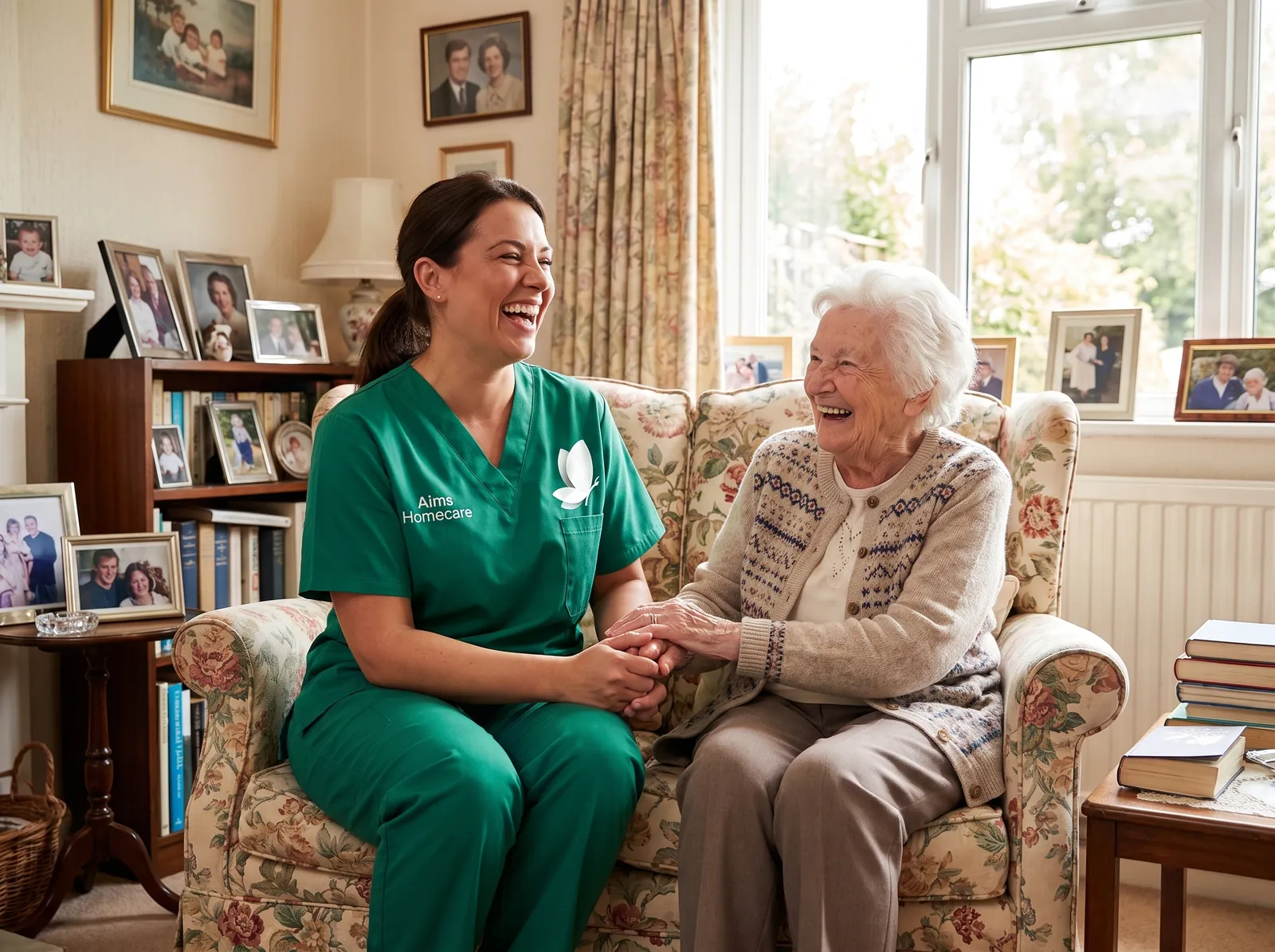
Rest for everyone
When a trained professional covers the night shift, family carers sleep through and wake with the energy and patience that daytime caring requires.
Who it's for
Around a third of people aged 65 and over fall at least once a year (Office for Health Improvement & Disparities), and the walk to the bathroom in the dark is a classic moment. A carer on hand overnight means every trip is a supported one, and if the worst does happen, help is there in seconds.
Sundowning, the restlessness and confusion that often worsens in the evening and at night, can be frightening for everyone. A calm, familiar carer keeps nights settled and safe.
The first nights at home after a hospital stay carry the highest risk of setback. Night care bridges that period: medication on time, mobility supported and the family reassured.
Where one person is rising three times a night, the arrangement cannot be sustained. Even two or three covered nights a week restores sleep and, with it, patience.
Who stays overnight
Allowing someone to stay in a relative's home overnight requires considerable trust. Every Aims night carer completes the following before a first shift.
Every carer completes an enhanced Disclosure and Barring Service background check before they ever set foot in a customer's home.
We follow up every reference personally, speaking to previous employers, not just filing paperwork.
We recruit for temperament first. Practical skills can be taught; patience and genuine kindness cannot, so those qualities decide who we appoint.
Our NVQ pathway plus first aid, manual handling and medication training, before care begins and refreshed regularly.
Regular supervision and spot checks led by our Registered Manager, so standards never slip once care is under way.
If your carer is unwell, a trained colleague who has been briefed on your care plan attends instead, so a night is not missed.
Every Aims carer is carefully recruited, fully trained and regularly supervised, and you will meet your night carer before care begins.
How it works
We visit you at home, or in hospital, to establish what the nights involve and what support is required.
We recommend sleeping or waking nights and build a plan around existing bedtime routines, with a written quote.
You meet your DBS-checked, trained night carer before care begins, because a familiar face matters most at night.
We adjust the care plan as nights change, and hand over to the family each morning.
Care can begin within 24 to 48 hours of your assessment.
"Aims Homecare are absolutely fantastic, we do not know what we would do without them."
"Excellent service. The carers we have are brilliant and so kind and caring. Always so attentive."
Night care questions
On a sleeping night, the carer sleeps in the home and wakes whenever help is needed, which suits occasional support and reassurance. On a waking night, the carer stays awake for the whole shift, providing continuous care, which suits frequent bathroom trips, repositioning, timed medication or dementia-related confusion. Your free assessment will recommend the best fit.
They get up and help, which is precisely what they are there for. Sleeping night carers stay close by and expect to be woken, and there is no limit and no additional charge for a call in the night. Where a carer is being woken several times each night, we would recommend moving to a waking night so that support is continuous.
Yes. Many families combine night care with hourly daytime visits for round-the-clock cover. Where support is needed day and night most of the time, live-in care is usually simpler and better value, and we will help you compare the two.
Night shifts are 8 hours or longer, typically running from evening until morning, for example 10pm to 7am. The exact times are set around your relative's bedtime and morning routine, and the carer helps them settle at night and get up the following day.
Sleeping nights (10pm to 7am) start at £175 per night and waking nights (10pm to 7am) from £30 per hour, with no call-out fees, no hidden charges and no weekend premium (Bank Holidays are double the standard rate), so the same rates apply 7 days a week. Every price is a "from" rate, and you will receive an exact written quote after a free assessment at home with no obligation. Our pricing page sets out full details and funding options.
On a sleeping night, yes, and that is the intention. The carer sleeps in the home but remains on call throughout and gets up whenever they are needed. On a waking night the carer does not sleep at all: they stay awake and alert for the entire shift, providing continuous care.
Yes. Many families arrange night care for a few weeks only, covering the first nights home after hospital, a family carer's holiday, or recovery after a fall. There is no long-term contract; care can begin within 24 to 48 hours and then stop, reduce or continue as needs change.
Very little. A sleeping night carer needs a bed or a comfortable chair in which to rest, and nothing further. A waking night carer does not require even that, since they are up throughout the night. Everything else is provided by the carer.
Related services
Local to you
Aims Homecare has provided overnight care in Surrey for more than 15 years, from our office on Kingston Road in Leatherhead. Whether you need a waking night carer in Surrey, sleeping night care, or overnight elderly care, your night carer is a local professional backed by a Surrey office team who answer the phone themselves. Sleeping nights (10pm to 7am) start at £175 per night and waking nights (10pm to 7am) from £30 per hour. Every price is a "from" rate, confirmed with an exact quote after your free assessment at home. See our home care pricing for full details and funding options.
Overnight care rarely stands alone. Many families pair night cover with specialist dementia care at home when sundowning makes the evenings hard, or with hourly daytime visits for round-the-clock reassurance. And when support is needed day and night most of the time, live-in care is often the simpler, better-value next step. Wherever you are in Surrey, night care begins the same way, with a free care assessment at home and care that can start within 24 to 48 hours.